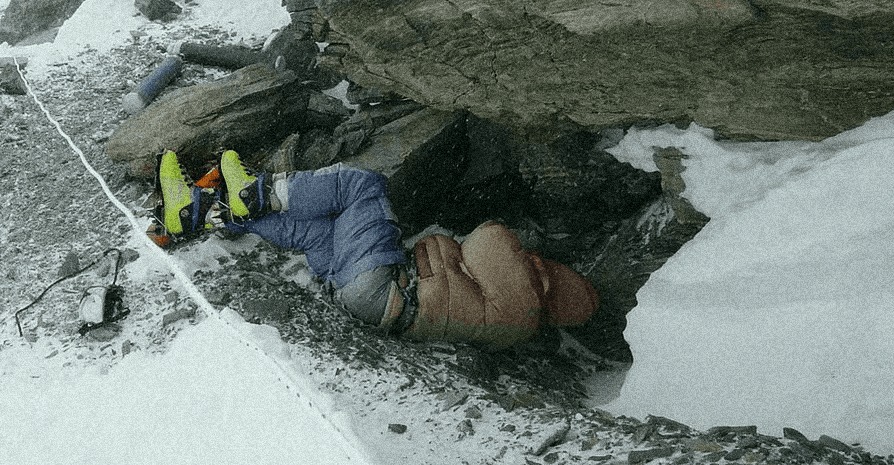
Green boots has been a famous landmark on Mount Everest for a long time before the body was moved, yes, sad but true. For nearly 30 years, one of the most haunting sights on the north side of Mount Everest has been a climber curled up in a small cave at 8,500 meters — known to thousands of mountaineers simply as “Green Boots.”Now, after DNA testing, the Indian government has confirmed his identity as Dorje Morup. But bringing him home may be one of the most difficult and dangerous recoveries ever attempted on the world’s highest mountain.
The Mystery of Green Boots
Every climber ascending Everest’s north side eventually passes the same chilling landmark: a man in distinctive green Koflach boots, frozen in a small cave-like alcove. For decades, he served as both a grim waypoint and a stark reminder of the mountain’s dangers.
Most people assumed he was Tsewang Paljor (often spelled Sang Palour or Swang Palour), one of three members of the 1996 Indo-Tibetan Border Police (ITBP) expedition who perished during a ferocious storm. But in 2024, Indian authorities quietly collected a DNA sample. The results, released in spring 2026, revealed the truth:
The man known as Green Boots is Dorje Morup, a Lance Corporal with the Indo-Tibetan Border Police.
His two teammates — Tsewang Paljor and Tsewang Smanla — remain missing somewhere on the mountain.
The Forgotten 1996 North Side Tragedy
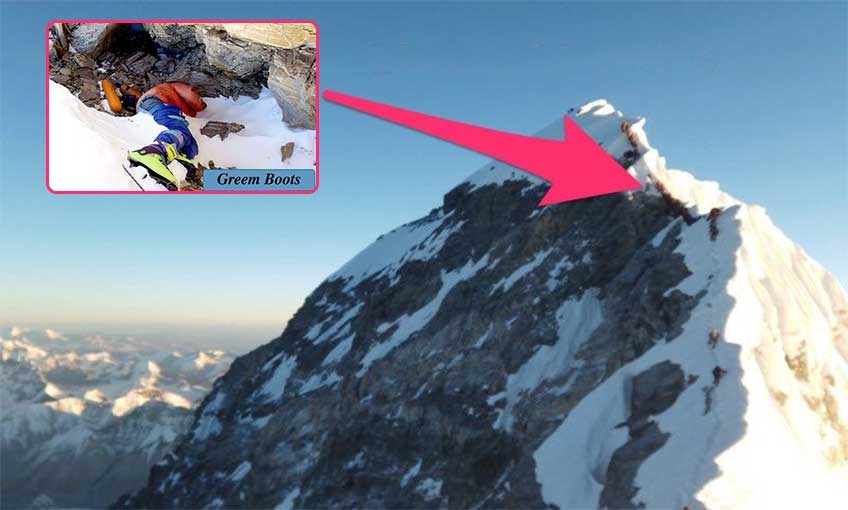
While the world focused on the South Side disaster made famous by Into Thin Air (Rob Hall, Scott Fischer, and others), a quieter tragedy unfolded on the Tibetan side. On May 10, 1996, six Indian climbers from the ITBP set out to achieve the first Indian ascent of Everest from the north. They summited in brutal whiteout conditions. On the way down, three of them — Dorje Morup, Tsewang Paljor, and Tsewang Smanla — were caught in the storm and never made it back to camp. For nearly three decades, Dorje Morup’s body became one of the most photographed and recognized sights on Everest.
India’s Plan to Recover Dorje Morup
In 2026, the Indian government issued a formal request for bids to recover Dorje Morup’s remains. The mission would involve:
- Up to six elite Sherpas
- As long as 40 days on the mountain
- Recovery window between June and September 2026 (most likely post-monsoon in August)
- Goal: Return the body to Delhi by October
The operation would take place deep in the death zone at 8,500 meters — one of the most hostile environments on Earth.
Why This Recovery May Be Nearly Impossible
Veteran Everest guide Russell Brice (often called the “Godfather of Everest Base Camp”) previously attempted to move Green Boots in 2007 with his Sherpa team. He later wrote:
“Yes, we did try to move Green Boots, but indeed he was frozen to the ground and it was not possible to remove him in a respectful way.”
After more than a decade on the mountain, the body had become fused to the rock and ice through repeated freeze-thaw cycles. Clothing, boots, and even skin had bonded with the surface.This is not unusual at extreme altitude. When George Mallory’s body was discovered in 1999 at around 8,150 meters, it took the team hours just to chip away the surrounding ice — and they still couldn’t fully extricate him on the first day. A recovery at 8,500 meters would require multiple days of dangerous, exhausting work in freezing temperatures and deep snow.
Additional Challenges
- Political hurdles: The Chinese Tibetan Mountaineering Association controls access to the north side. Special permits would be required.
- Extreme conditions: The post-monsoon season brings colder temperatures and heavier snow.
- High cost: Similar (but much simpler) body recoveries on the south side have cost the Indian government around $90,000. This mission could easily exceed half a million dollars.
A Respectful Alternative?
There should be a thoughtful backup plan if full recovery proves too dangerous:
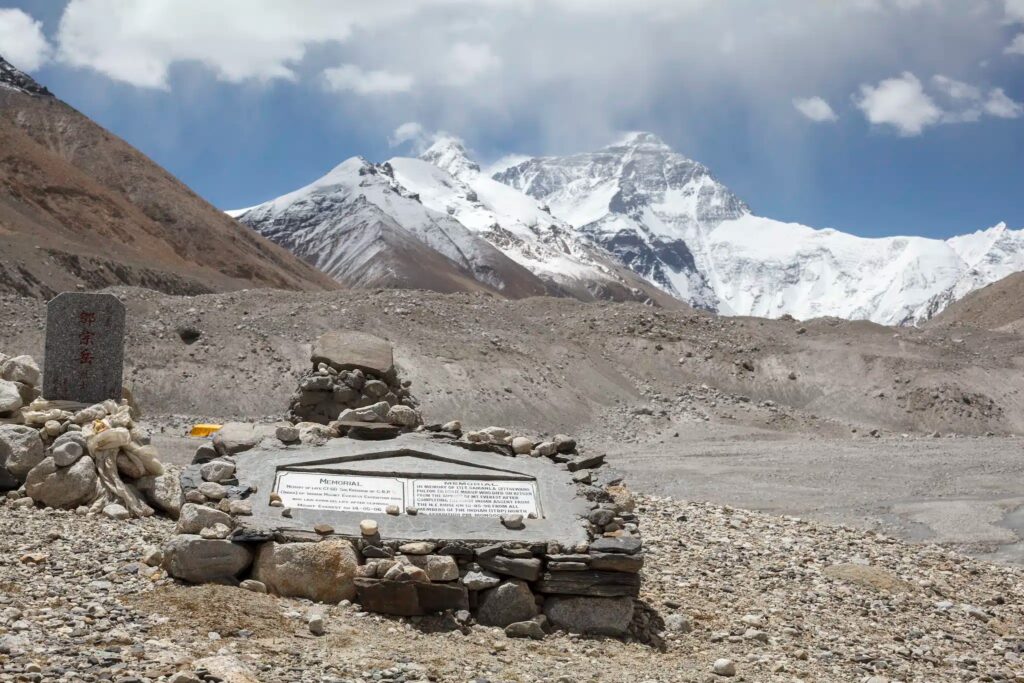
Bring materials to respectfully cover Dorje Morup’s remains so they gradually disappear under snow and ice. Then place a memorial stone or cairn nearby, and hold a proper prayer ceremony with representatives from India—including the names of all three fallen climbers: Dorje Morup, Tsewang Paljor, and Tsewang Smanla.
This approach would bring closure to the families while avoiding unnecessary risk to rescue teams.
What Should Happen Next?
The question is no longer just who Green Boots is—it’s what should be done with him. Should India attempt the high-risk recovery?
Should the body remain where it has rested for 30 years?
Or is a dignified covering and memorial the most respectful solution?
What do you think?
Should Dorje Morup be brought home, or should he be left to rest on the mountain with a proper memorial? Share your thoughts in the comments below.