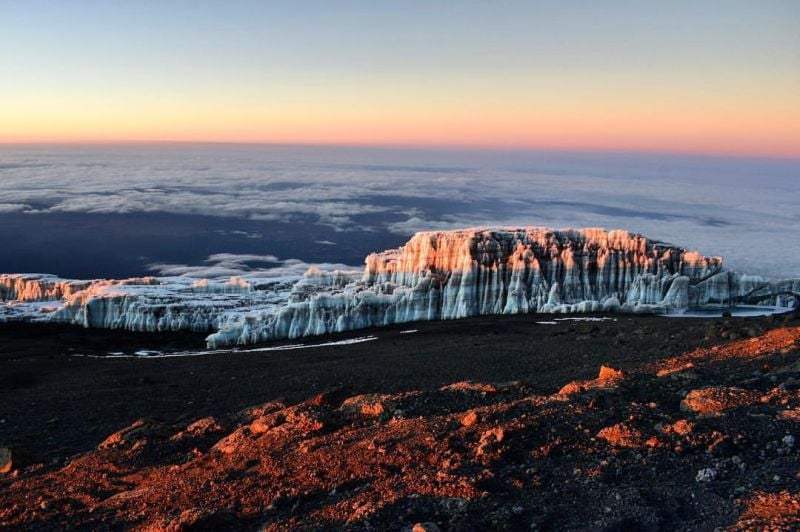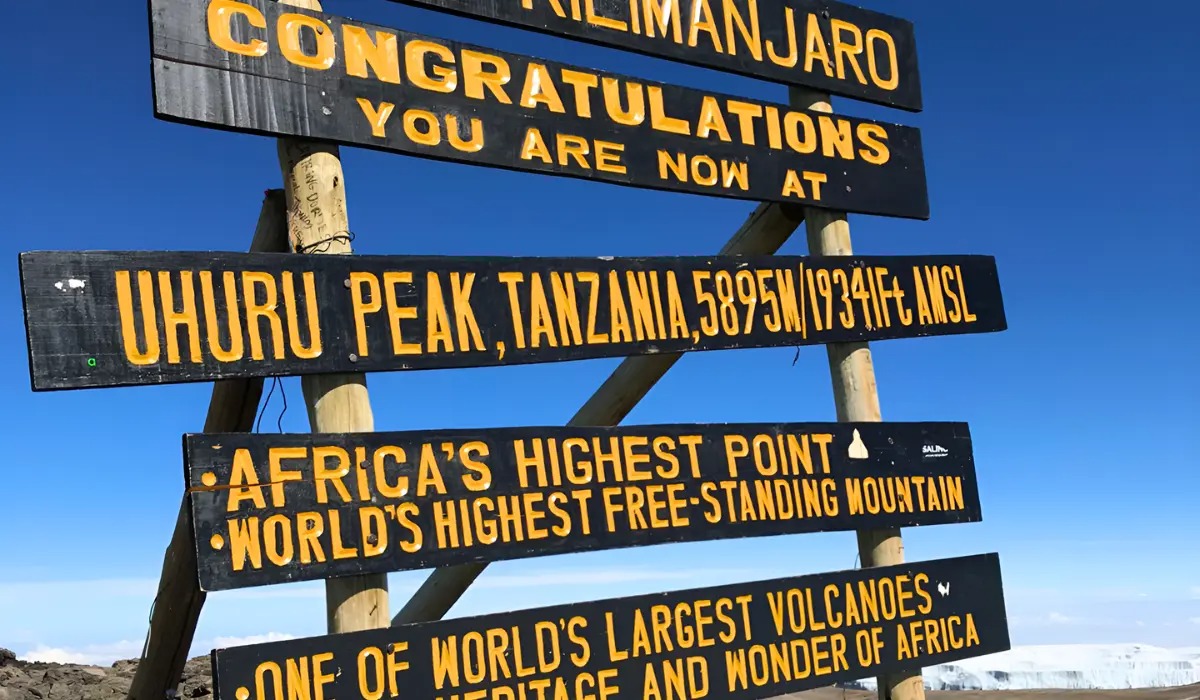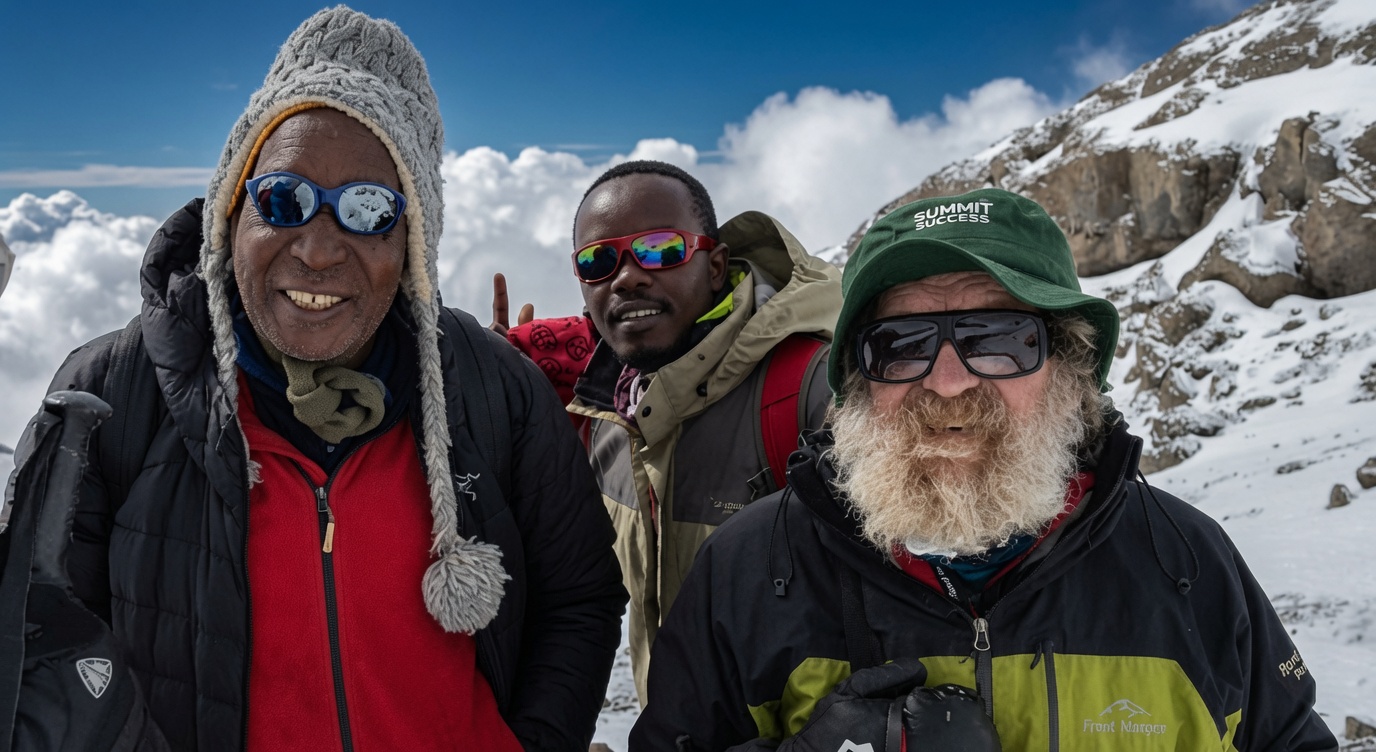
On February 22, 2021, Polish adventurer Aleksander Doba reached the roof of Africa. At Uhuru Peak, the highest point on Mount Kilimanjaro (5,895 meters / 19,341 feet), the 74-year-old fulfilled a long-held dream. Moments later, after asking for a brief rest before a summit photo, he sat on a rock, lost consciousness, and never woke up.
He died as he had lived — pushing the boundaries of human endurance in pursuit of exploration. According to his son Czesław, the cause was asphyxia resulting from high-altitude pulmonary edema (HAPE). Fluid-filled Doba’s lungs at extreme altitude, depriving his body of oxygen. Early reports noted that a heart attack is common in such sudden summit deaths and that confirmation would take time, but the family’s statement clarified the medical reality: HAPE, a known high-altitude risk even for fit individuals with no prior symptoms.
A Life of Late-Blooming Adventure
Aleksander “Olek” Doba was born on September 9, 1946, in Swarzędz near Poznań, Poland. He studied mechanical engineering and worked for decades in a chemical factory. He didn’t discover kayaking until age 34, during a company trip in 1980. What began as a hobby became an all-consuming passion.
By his late 50s, Doba was a champion whitewater slalom paddler, winning gold at the Open Academic Polish Championships in 2003 and defending the title the next year. He completed epic river and sea journeys: circumnavigating the Baltic Sea (4,227 km in 80 days), paddling 5,369 km from his home in Police to Narvik in Norway, and circling Lake Baikal solo (2,000 km in 41 days). But these were mere warm-ups for the Atlantic.
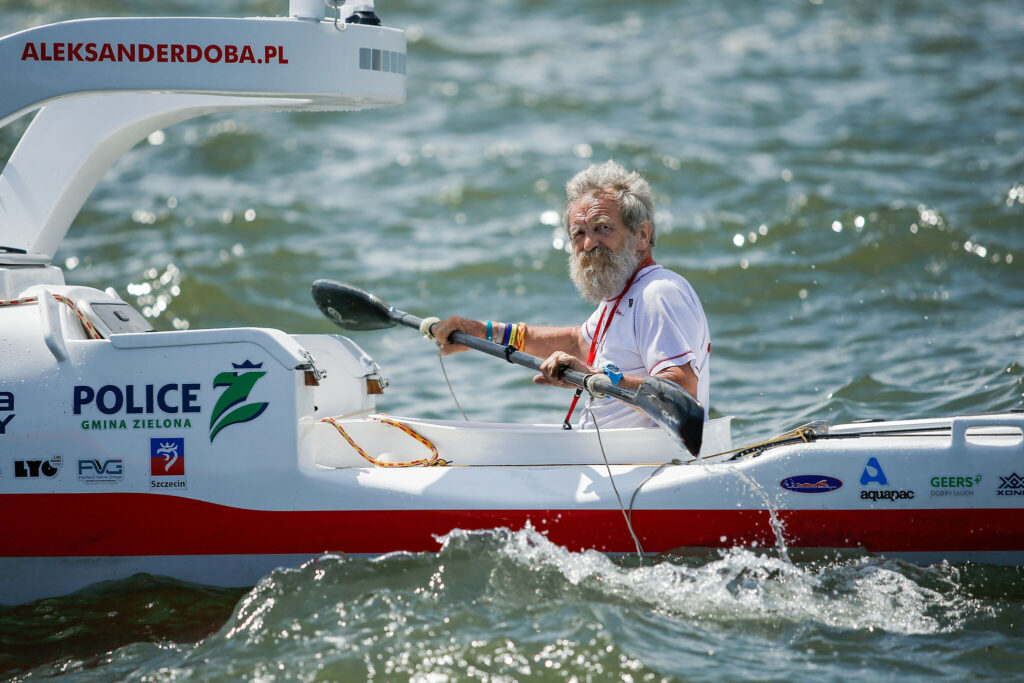
Three Solo Crossings of the Atlantic —
Kayaking Against All Odds
Doba became the first person to kayak solo across the Atlantic Ocean three times. Each crossing was more grueling than the last, undertaken in custom-built sea kayaks he helped design (named Olo after his nickname).
First crossing (2010, age 64): From Senegal to Brazil — 99 days, roughly 5,394 km. Conditions were brutal: unbearable heat and humidity, near-constant risk of sunstroke, salt rashes covering his body, an eye infection, and fingernails and toenails peeling off. His clothes stayed perpetually wet and irritated his skin, so he paddled naked for much of the journey. Without waterproof hearing aids, he was effectively deaf for weeks. Only one journalist and the Polish ambassador greeted him in Brazil. No one seemed to care — yet.
Second crossing (2013–2014, age 67): From Portugal across the widest part of the Atlantic to Florida — 196 days and over 10,000 km. His satellite phone failed; he pressed the help button on his SPOT device, and a Greek ship arrived. Doba refused rescue, only wanting his phone fixed. The crew eventually gave up. Later, he stopped in Bermuda for a month to repair his rudder. He finally arrived in Florida to a hero’s welcome and was named National Geographic’s 2015 People’s Choice Adventurer of the Year.
At the awards ceremony, organizers asked him to say “Thank you very much” in English. Doba, wearing jeans, replied in Polish: “Polacy nie gęsi i swój język mają”—”Polish people are not geese and have their own language.
”Third crossing (2017, age 70): From New Jersey to France — 110 days. This was his most dangerous voyage. He endured multiple violent storms with 55-knot winds and towering waves. During one two-day storm, the sea anchor rope snapped; wearing only a harness, he crawled out of the cabin to deploy a new one and somehow survived. His rudder bent beyond repair, forcing him to accept reluctant help from a passing freighter. The captain was hesitant to let a sleep-deprived, rash-covered 70-year-old return to the ocean alone — but Doba insisted. He bypassed the UK coast by just a few hundred meters because he had promised himself he would reach the European continent.
These voyages earned him at least 10 Guinness World Records and cemented his status as one of the greatest ocean kayakers in history. He spent well over a year completely alone at sea across the three trips.
Why Kilimanjaro?
Doba never let his kayaks limit his curiosity about the world. In interviews, he spoke of his fascination with the name “Kilimanjaro” — Africa’s highest mountain. He planned the climb as part of a broader African adventure that also included safaris in Tarangire and Ngorongoro national parks and a visit to Zanzibar.He joined a group tour but quickly split off to climb at his own pace with two local guides. Throughout the ascent, he showed no symptoms of altitude sickness and remained in excellent spirits. Near the first peak (often called Stella Point), he shouted “Wild Africa!” to fellow climbers and said he felt in great shape and happy.
The Final Moments on Uhuru Peak
Doba and his guides reached Uhuru Peak on February 22, 2021. He asked for a short rest — just two minutes — before posing for a summit photograph. He sat on a rock… and simply fell asleep.
Resuscitation efforts by his guides and others on the summit failed. He died peacefully at the top of Africa, exactly where he wanted to be.
His family later stated that the cause was high-altitude pulmonary edema leading to asphyxia. Doba had reached the summit successfully; the mountain claimed him only in the moments of rest afterward.
The Man Behind the Beard
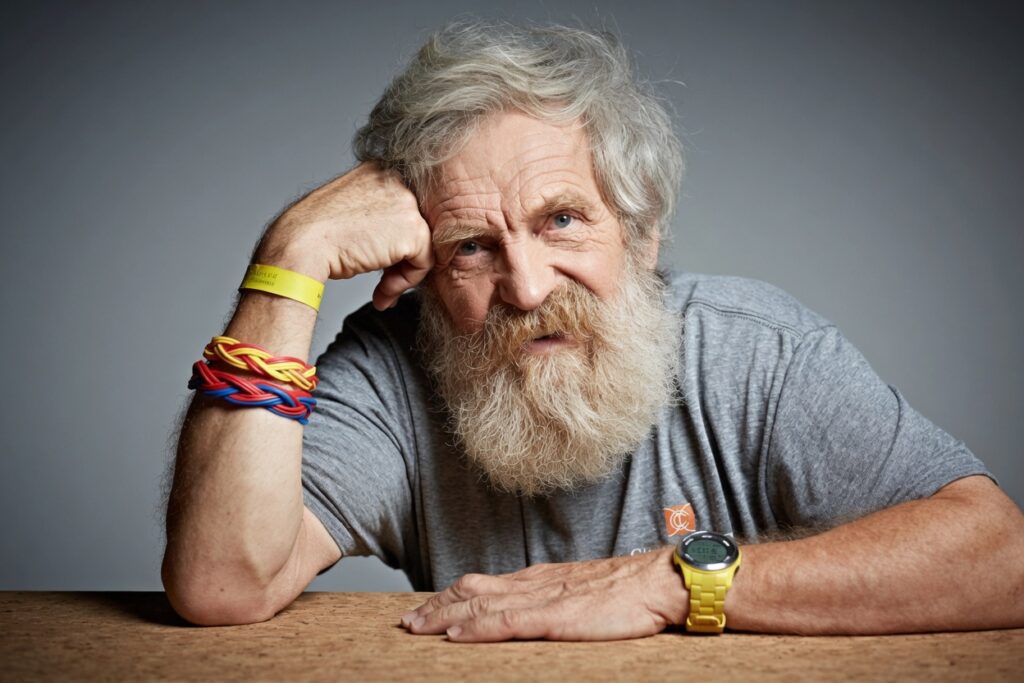
Doba was a compact, muscular man with a wild gray beard and an ancient, friendly face that became iconic in the adventure world. He was fiercely independent and stubbornly solo — he once refused ropes thrown to him by rescuers because he only wanted technical help, not extraction. His wife Gabriela often worried (she was “a little pissed” about the third Atlantic crossing), yet she supported his dreams. His sons, Bartłomiej and Czesław, were proud of their father’s unyielding spirit.Doba proved again and again that age is just a number when matched with iron determination. He started serious adventure in his 30s, set world records in his 60s and 70s, and was still climbing one of the world’s most iconic peaks at 74.
A Lasting Legacy
Aleksander Doba died doing what he loved most: exploring. He left behind a wife, two sons, multiple books (three written by him), awards including Poland’s highest honors (posthumously the Officer’s Cross of the Order of Polonia Restituta), and an indelible inspiration for anyone who thinks they’re “too old” for big dreams.His story reminds us that the greatest adventures often come with real risks — but for Doba, a life without pushing limits was no life at all. He kayaked naked across the Atlantic, survived monstrous storms, and summited Kilimanjaro. In the end, he passed away on the very peak he had come to conquer, surrounded by the vast African sky.“Kayaks did not dissuade me from other forms of exploring the world,” he once said.
Aleksander Doba lived — and died — as a true explorer. His legacy will continue to inspire generations to chase their own wild dreams, no matter the distance or the altitude.
Rest in peace, Olek. You reached the summit.