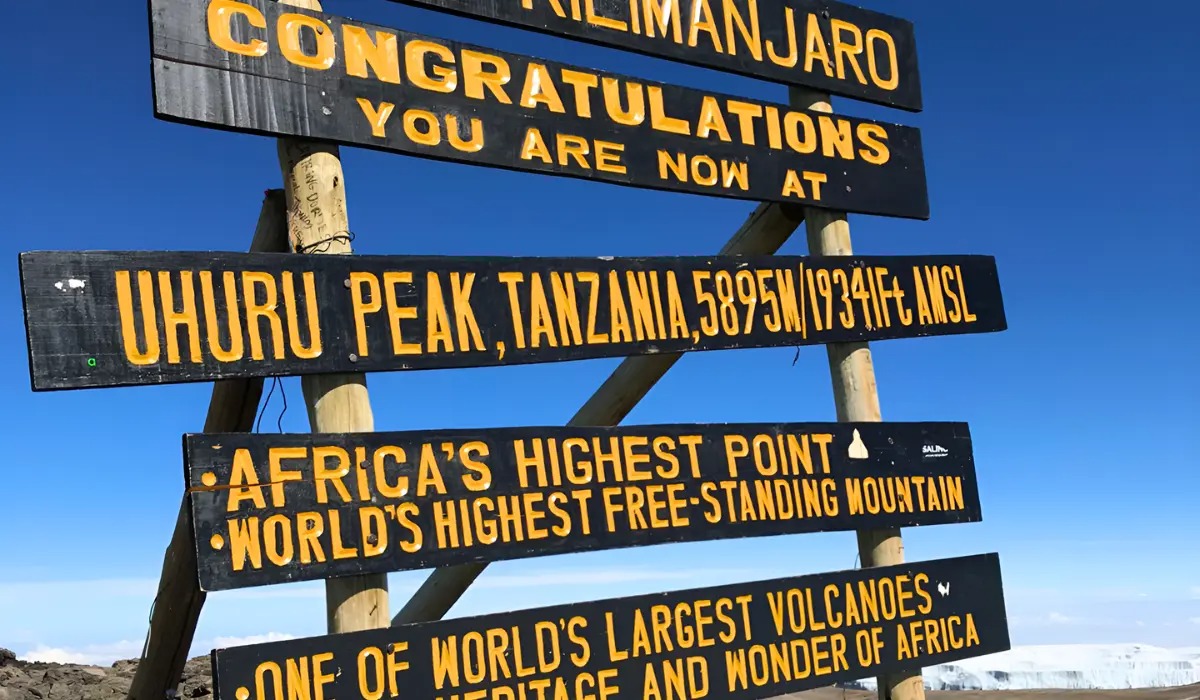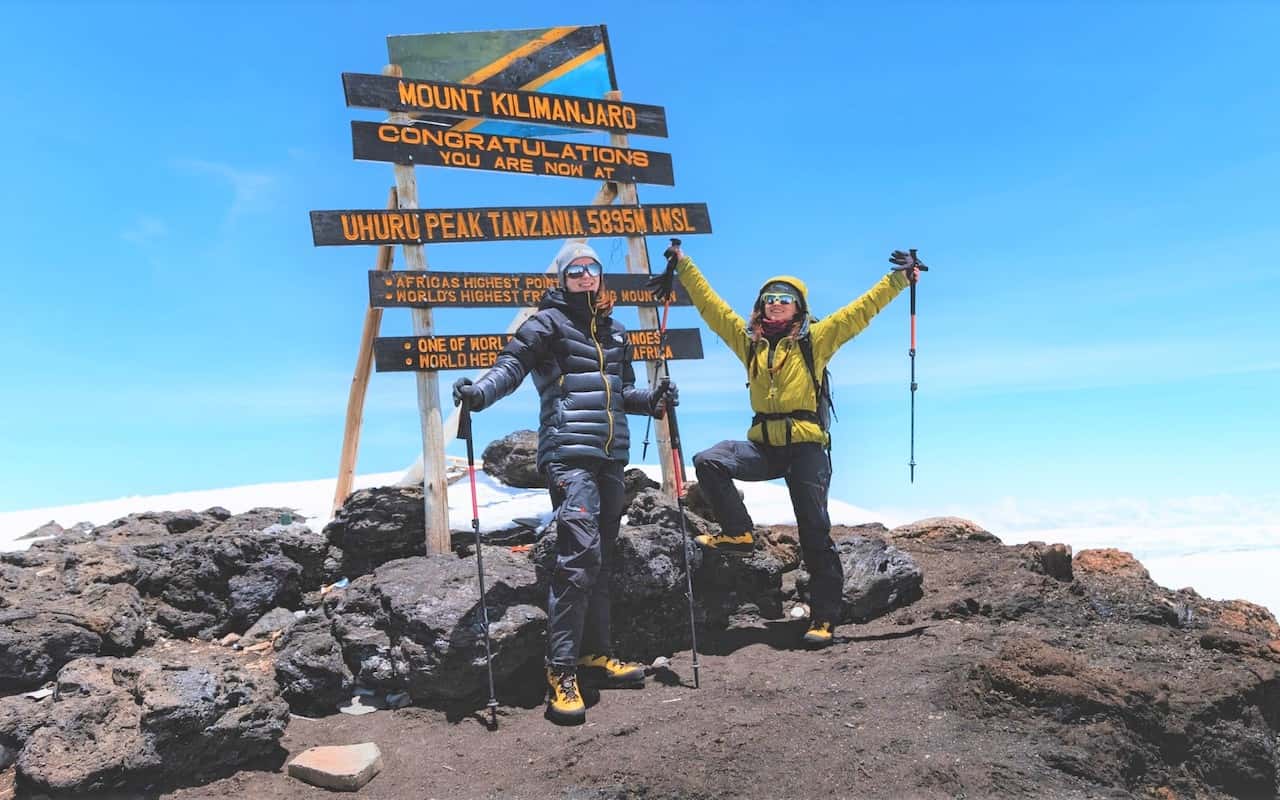
There’s something undeniably powerful about standing on the roof of an entire continent. Uhuru Peak, the highest point in Africa at 5,895 meters (19,341 feet), offers more than just a summit photo. It’s a journey through wildly different landscapes, a test of both body and mind, and a deeply meaningful experience that stays with you long after you’ve returned home. Whether you’re an experienced trekker or someone looking for a once-in-a-lifetime adventure, climbing to Uhuru Peak on Mount Kilimanjaro is one of those rare trips that changes how you see the world — and yourself.
Africa’s Highest Point: What Exactly Is Uhuru Peak?
Uhuru Peak sits on the rim of Kibo, the tallest and only active crater of Mount Kilimanjaro’s three volcanic cones. The other two — Mawenzi and Shira — are long extinct. At 5,895 meters, Uhuru Peak is not only the highest point in Africa but also the highest point you can reach on the continent without technical mountaineering equipment. The name “Uhuru” comes from Swahili and means “freedom.” It was given to the summit in 1961, shortly after Tanganyika (now part of Tanzania) gained independence from Britain. Raising the flag at the top was a powerful symbol of national pride and self-determination. That meaning still resonates today — for many climbers, reaching Uhuru Peak feels like a personal declaration of freedom and resilience.
The highest free-standing mountain in the world.
One of the most striking things about Kilimanjaro is that it’s a freestanding mountain. Unlike most major peaks that belong to vast ranges like the Himalayas or Andes, Kilimanjaro rises dramatically from the flat plains of northern Tanzania all by itself. When you finally reach Uhuru Peak, there’s no surrounding ridgeline or neighboring peaks to block the view. On a clear day, you can see across the vast savannahs below and even catch glimpses of Kenya in the distance. It truly feels like standing on top of the world, with nothing but sky and horizon in every direction.
A Journey Through Five Climate Zones
Few treks in the world offer such dramatic variety in such a short time. In just five to nine days, you’ll walk through five completely different ecosystems:
- Cultivation Zone (800–1,800m): Farmland, small villages, and banana plantations
- Rainforest (1,800–3,000m): Lush jungle filled with moss-covered trees and the sounds of birds and monkeys
- Heath and Moorland (3,000–4,200 m): Wide open spaces with strange, otherworldly plants like giant lobelias and groundsels
- Alpine Desert (4,200–5,000m): Dry, rocky terrain with almost no vegetation and strong winds
- Arctic Zone (above 5,000m): Glaciers, snow, and freezing temperatures near the summit
It’s like walking from the equator straight into the Arctic in less than a week. Many climbers say this constant change in scenery is one of the most memorable parts of the entire experience.
The Emotional Side of Reaching Uhuru Peak
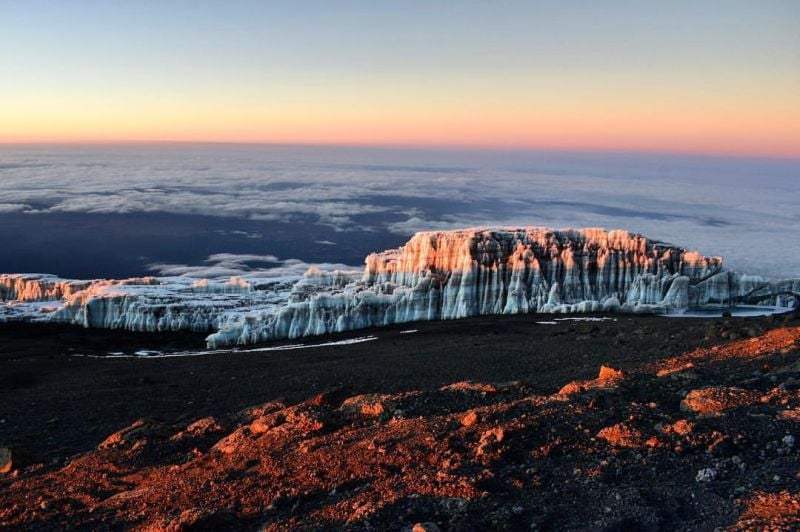
The final push to the summit is often described as the hardest — and most rewarding — part of the climb. Most groups leave their high camp around midnight and hike for 6–8 hours in the dark and cold. The air is thin, your legs are tired, and the only light comes from your headlamp and the stars above. Then, just before sunrise, you reach the crater rim. Many people break down in tears at Stella Point (5,756m), overwhelmed by exhaustion and emotion. From there, it’s another 45–60 minutes along the crater rim to Uhuru Peak itself. When the sun finally rises and lights up the glaciers, the feeling is indescribable. You’re standing above the clouds, looking out over Africa, knowing you earned every single step. It’s a mix of pride, relief, and pure wonder that very few experiences can match.
Route Options and When to Go
There’s no single “best” way up Kilimanjaro, but some routes are better suited for success and enjoyment:
- Lemosho Route—Currently one of the most popular for its scenic beauty and excellent acclimatization profile
- Machame Route — Known as the “Whiskey Route” for being scenic but more challenging
- Marangu Route — The only route with hut accommodation (easier logistics but lower success rate)
- Rongai Route — Quieter and approaches from the drier northern side
- Northern Circuit — The longest route with the highest success rate
The best times to climb are during the drier seasons: January to mid-March and June to October. These months offer clearer skies and more stable weather, though June–October tends to be busier.
Why Uhuru Peak Belongs on Your Bucket List
Here’s why so many people consider this climb life-changing:
- It’s achievable without technical skills.
You don’t need ice axes or crampons. With proper preparation and a good guide, most reasonably fit people can reach the summit. - The transformation is real
Many climbers say they return home with more confidence and a different perspective on what they’re capable of handling. - You’re seeing something that’s disappearing.
Kilimanjaro’s glaciers have been shrinking rapidly due to climate change. Climbing now means you can witness this iconic landscape before it changes forever. - It supports local communities.
When you climb with a responsible operator, your trip directly supports porters, guides, cooks, and their families.
What Real Climbers Say
Many people describe the summit as both the hardest and most rewarding thing they’ve ever done. One climber shared that repeating a simple mantra—” We didn’t come this far to only come this far”—helped him push through the toughest moments. Another spoke about bursting into tears of joy when the sun rose at the top, calling it one of the most awe-inspiring moments of her life. These stories are common. The mountain has a way of stripping everything down to what really matters.
The Uhuru Peak trek is more than just reaching the summit.
Uhuru Peak isn’t just about reaching the highest point in Africa. It’s about the journey—the early mornings, the altitude headaches, the quiet conversations with your team, and that unforgettable moment when you stand above the clouds at sunrise. If you’ve ever felt the pull of a big adventure, one that challenges you and leaves you changed, then Uhuru Peak should absolutely be on your bucket list. It’s not an easy climb, but it’s one of the most accessible high-altitude adventures in the world—and one that rewards you with memories that last a lifetime. Are you ready to take on Africa’s rooftop?